
Sea Turtle Species
The seven sea turtle species that grace our oceans belong to a unique evolutionary lineage that dates back at least 110 million years. Sea turtles fall into two main subgroups: the unique family Dermochelyidae, which consists of a single species, the leatherback, and the family Cheloniidae, which comprises six species of hard-shelled sea turtles. Learn all about the different types of sea turtles with our in-depth guide to the sea turtle species below.
Learn About the Different Sea Turtle Species
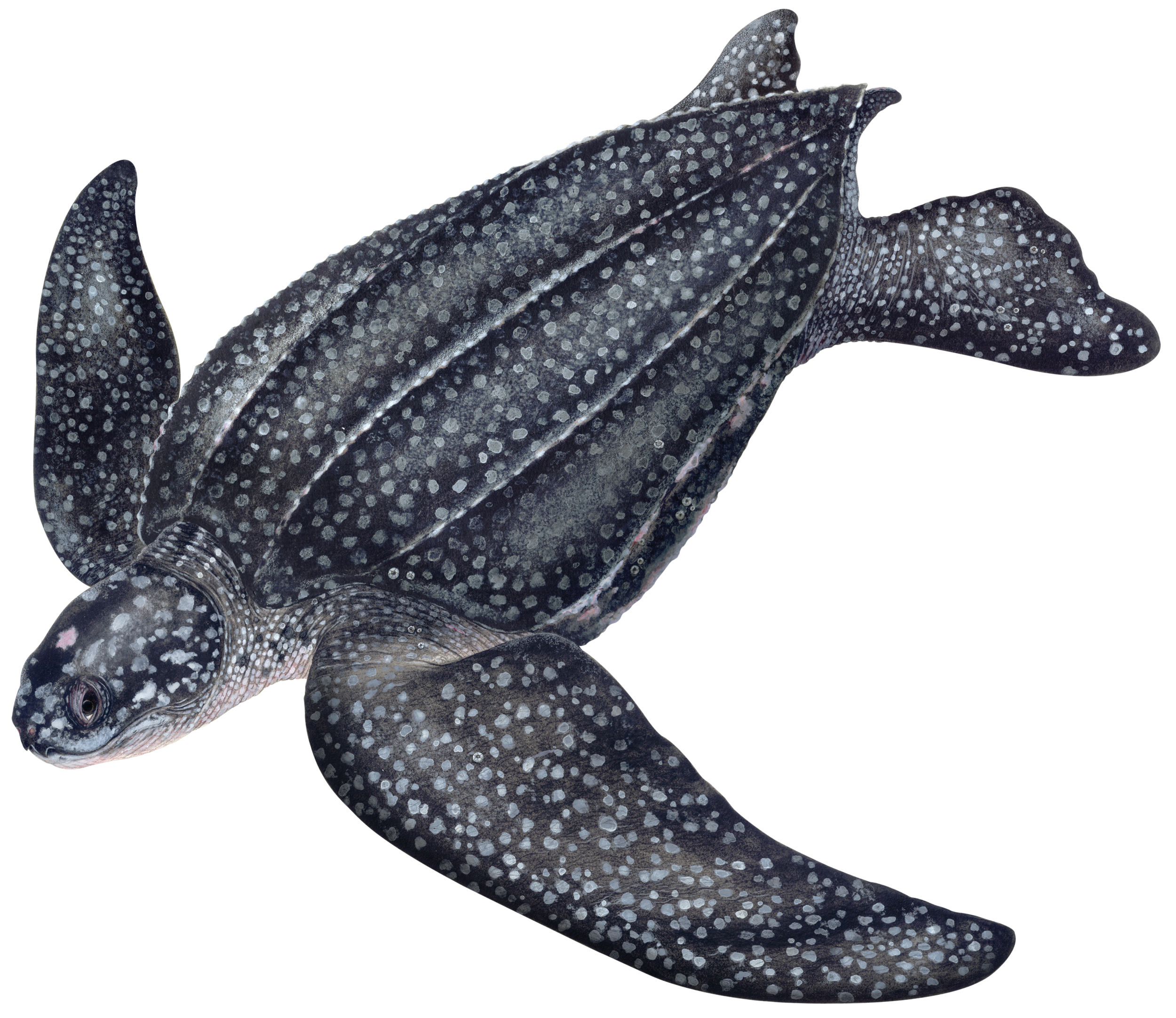
© Dawn Witherington
Leatherback Sea turtle (Dermochelys coriacea) | Vulnerable
The largest of the sea turtles, leatherback turtles can reach over 1.8 m (6 ft) in length and nearly 640 kg (1,410 lbs) in weight. During their long migrations, leatherbacks regularly dive to depths greater than 1,000 m (3,281 ft) in search of gelatinous zooplankton to eat. The leatherback is rapidly declining in many areas of the world.
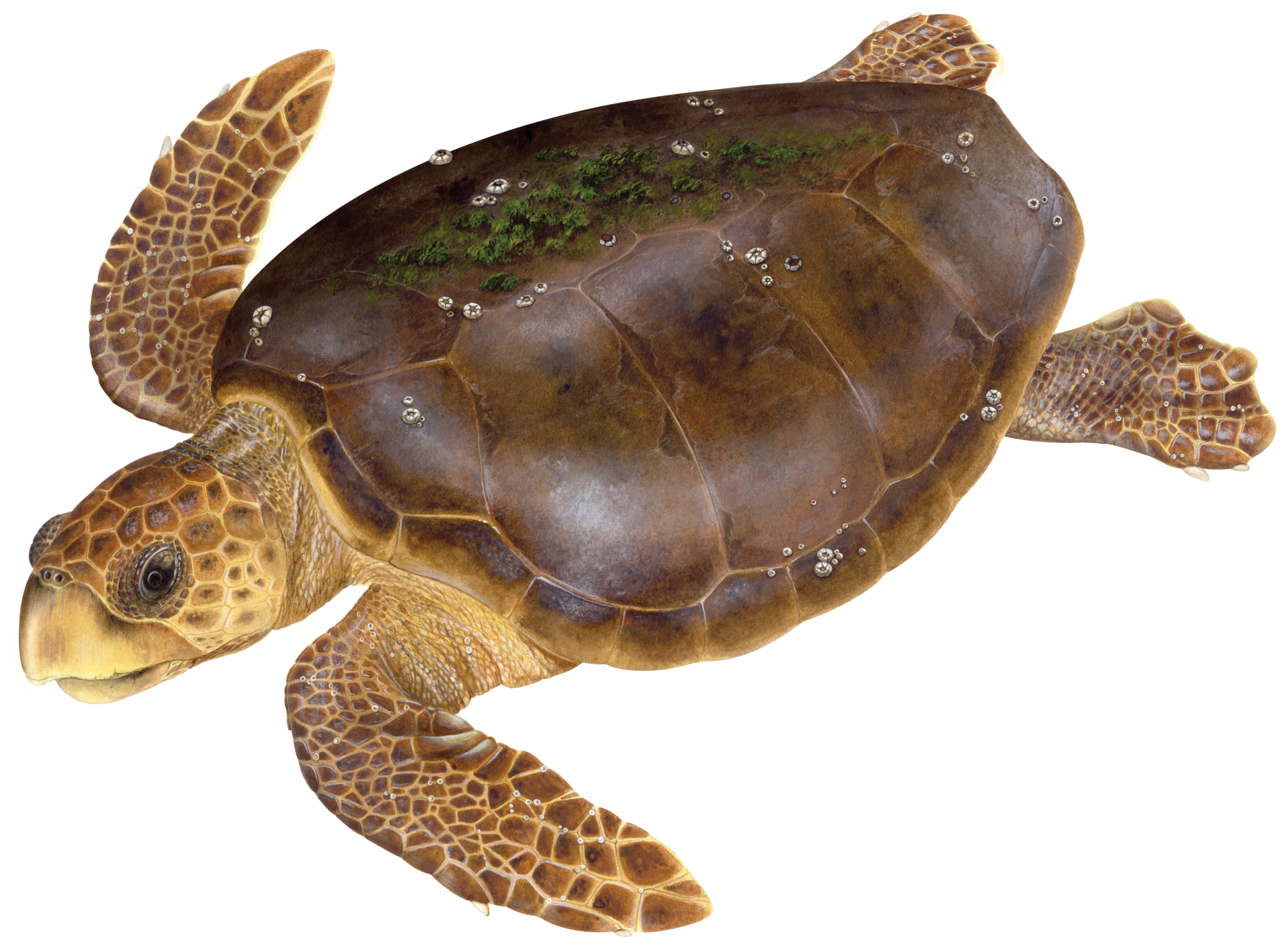
© Dawn Witherington
Loggerhead Sea turtle (Caretta caretta) | Vulnerable
Loggerhead turtles are named for their large heads, with jaws powerful enough to crush an adult queen conch. Like most sea turtles, loggerheads are famed for their vast migrations. As a species that may travel thousands of miles across ocean basins, loggerheads are threatened due to worldwide habitat loss and incidental capture by fishermen.
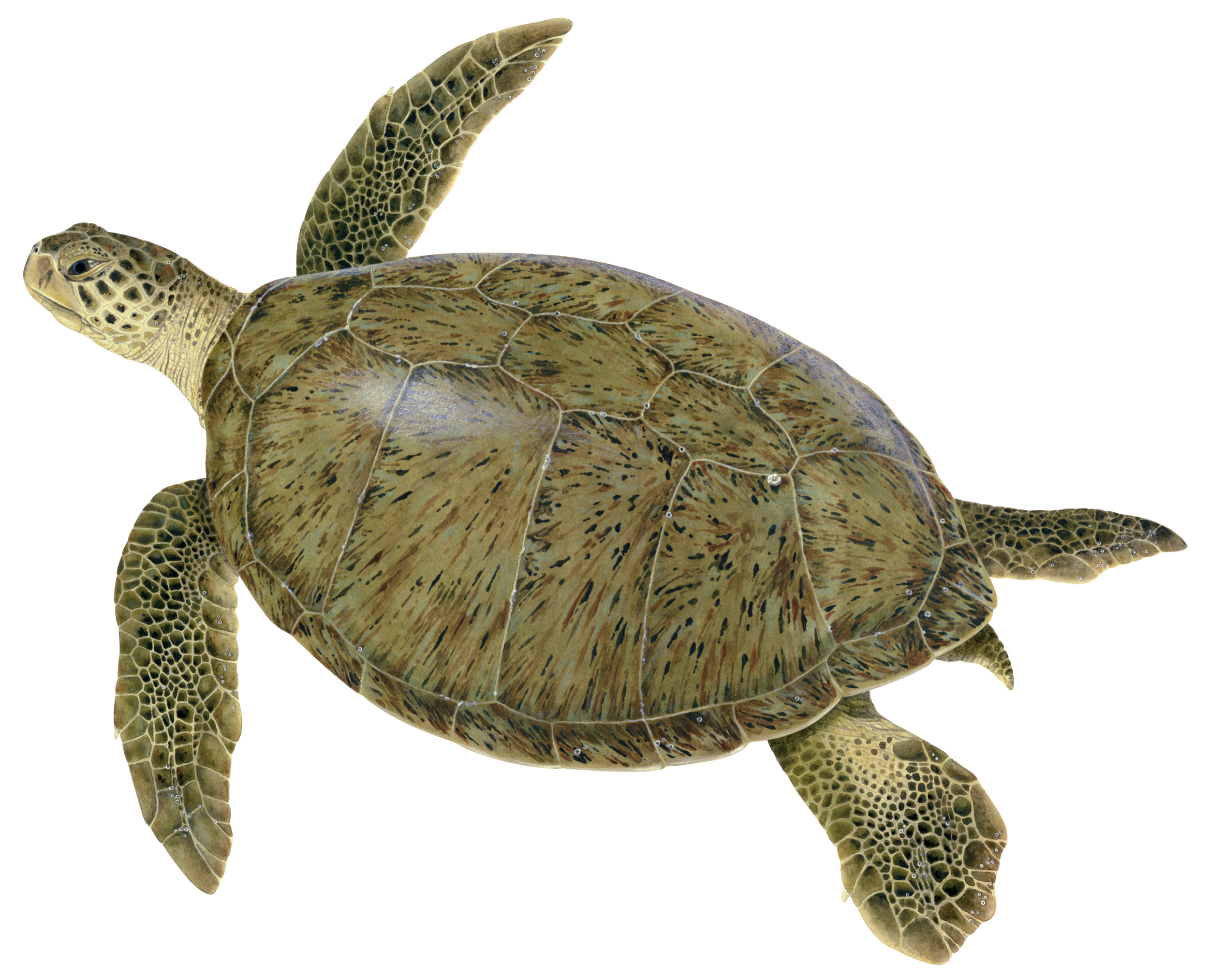
© Dawn Witherington
Green sea turtle (Chelonia mydas) | LEAST CONCERN
The green turtle has the most numerous and widely dispersed nesting sites of the seven species, and was once highly sought after for its body fat – a key ingredient in the popular delicacy, ‘green turtle soup.’ Although it has become illegal to trade them in many parts of the world, green turtles and their eggs continue to be consumed.

© Dawn Witherington
Flatback sea Turtle (Natator depressus) | data deficient
The flatback turtle is the least studied of the sea turtles and has one of the smallest geographic ranges. The only endemic sea turtle species, flatbacks nest solely along the northern coast of Australia, and live solely on the continental shelf between Australia, southern Indonesia, and Papua New Guinea.

© Dawn Witherington
Kemp’s ridley sea turtle (lepidochelys kempii) | critically endangered
The Kemp’s ridley turtle is the smallest of the sea turtles and has an extremely restricted range, nesting only along the Gulf of Mexico shores of northern Mexico and in Texas, U.S.A. Fifty years ago, the Kemp’s ridley was near extinction. Although this species now shows signs of recovery, fishing nets and coastal development continue to threaten the species, and much work remains to be done before it can be considered safe.
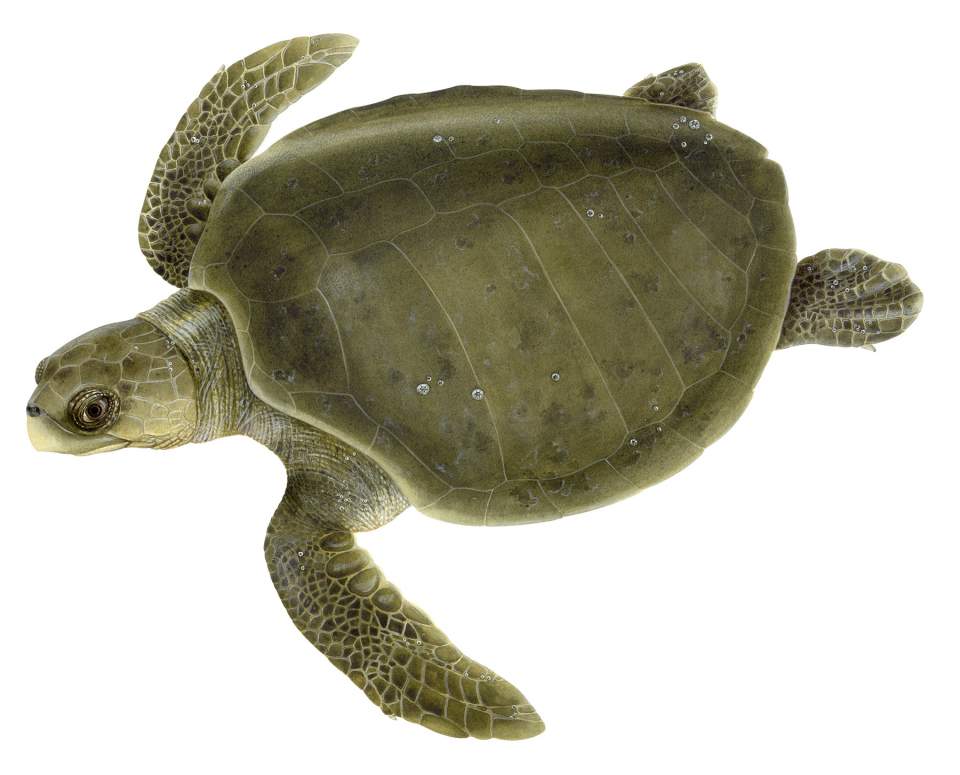
© Dawn Witherington
Olive ridley sea turtle (Lepidochelys olivacea) | Vulnerable
In one of nature's greatest spectacles known as arribadas, the Spanish word for ‘arrival,’ olive ridley turtles come ashore simultaneously by the hundreds and thousands to nest. Though they are the most abundant of sea turtles, olive ridleys are increasingly threatened by trawling and coastal development.

© Dawn Witherington
Hawksbill sea Turtle (Eretmochelys imbricata) | critically endangered
Named for its sharp, pointed beak, the hawksbill turtle feeds primarily on reef sponges, invertebrate organisms whose bodies contain tiny indigestible glass needles. The hawksbill has a beautiful, translucent shell, which has long been exploited for use in tortoiseshell jewelry. Though international trade of tortoiseshell has been prohibited, illegal trafficking continues.