Hawksbill Sea Turtle
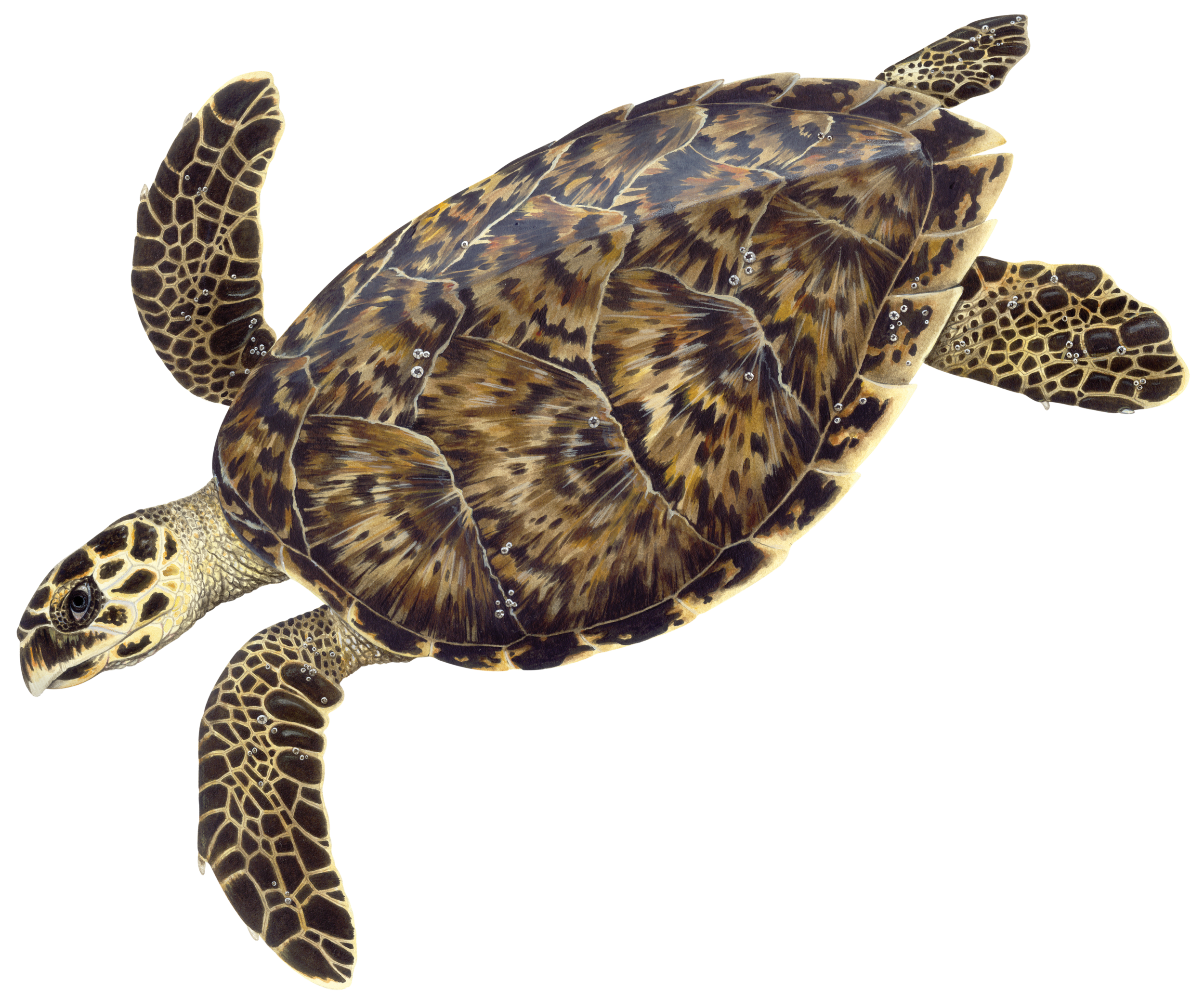
Named for their sharp, pointed beaks, adult hawksbill sea turtles feed primarily on reef sponges, invertebrate organisms whose bodies contain tiny indigestible glass needles. Hawksbills have a beautiful, translucent shell, that has long been exploited for use in tortoiseshell jewelry and handicrafts. Though international trade of tortoiseshell has been prohibited, illegal trafficking continues.

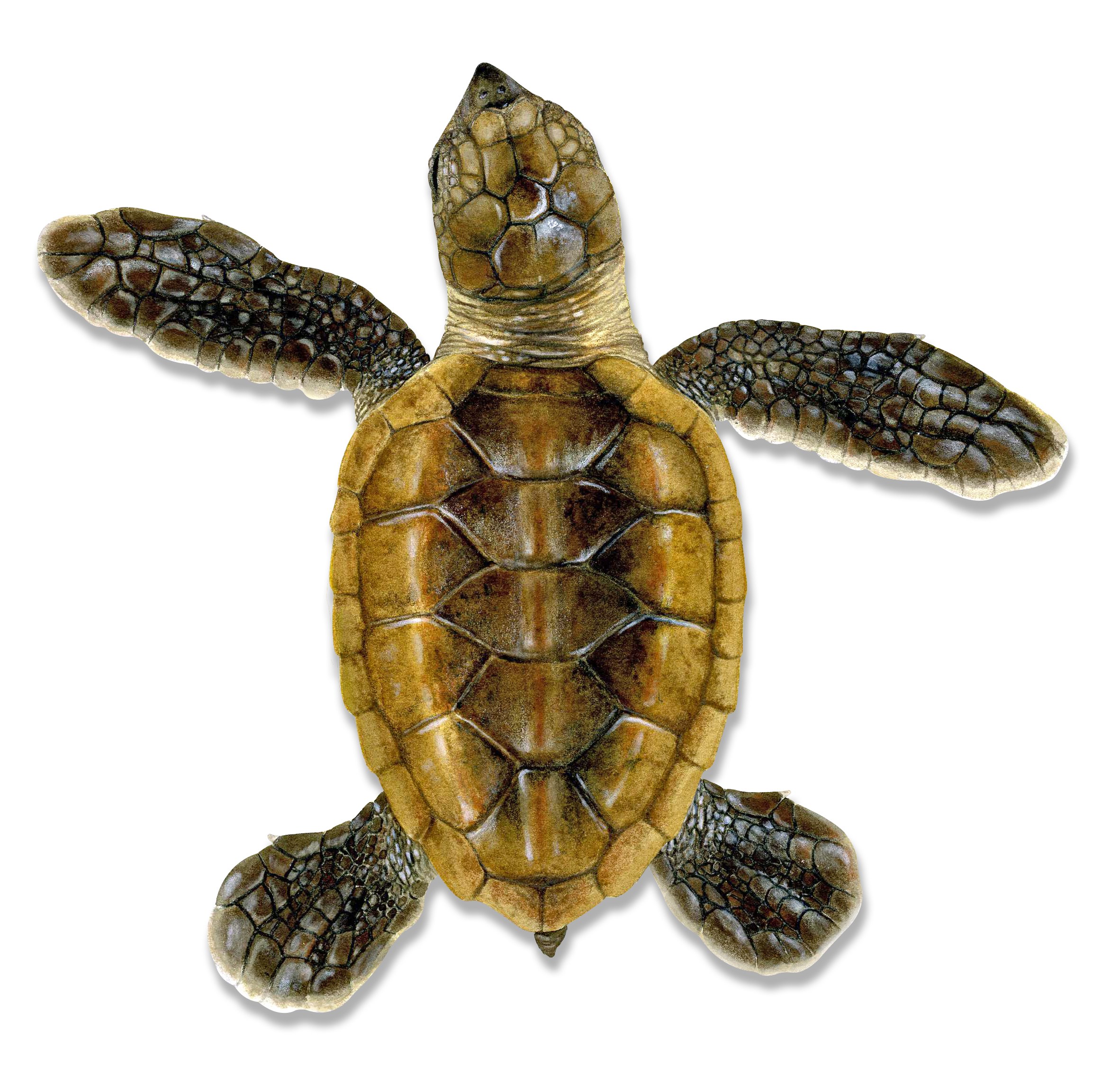
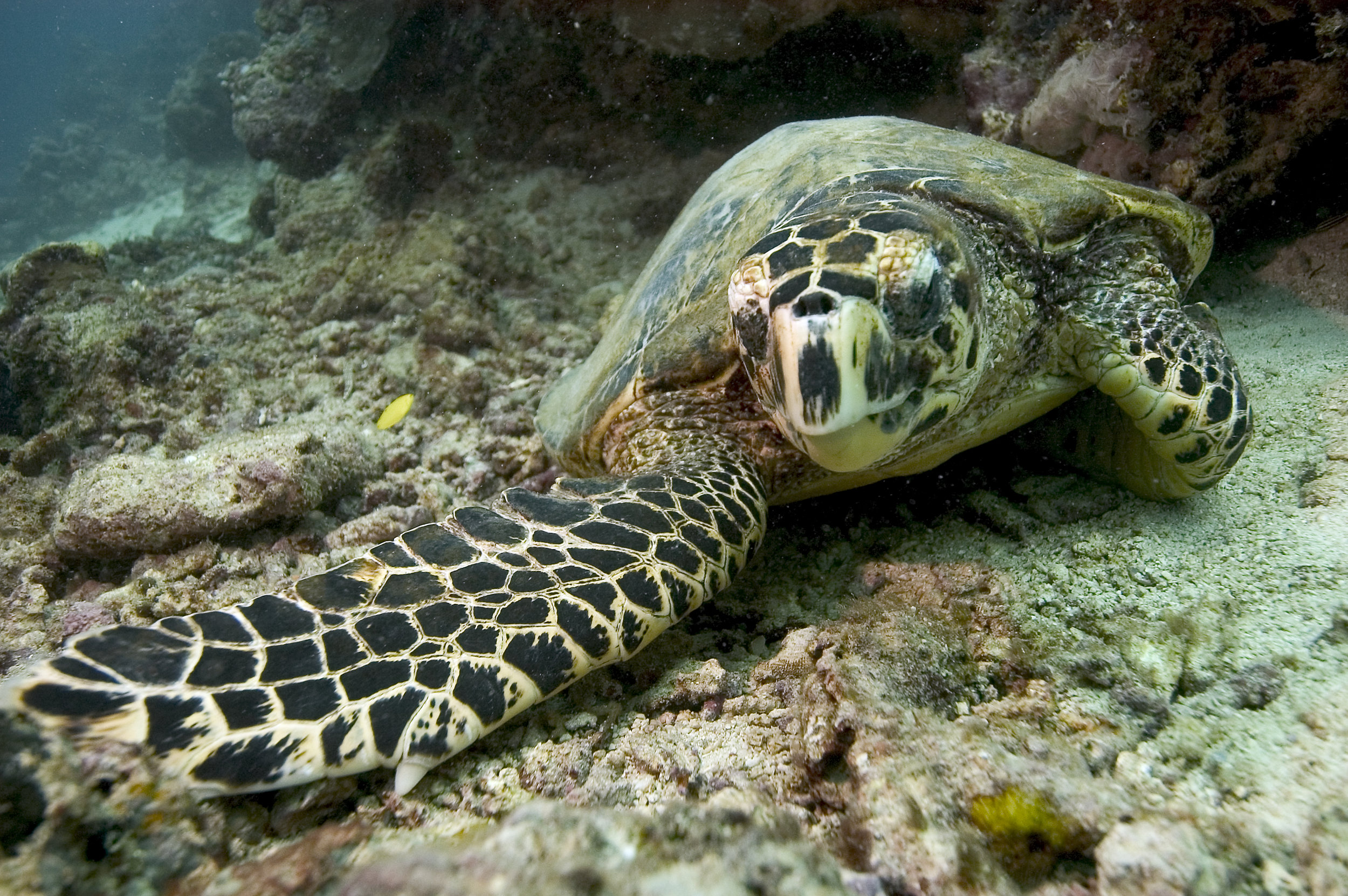
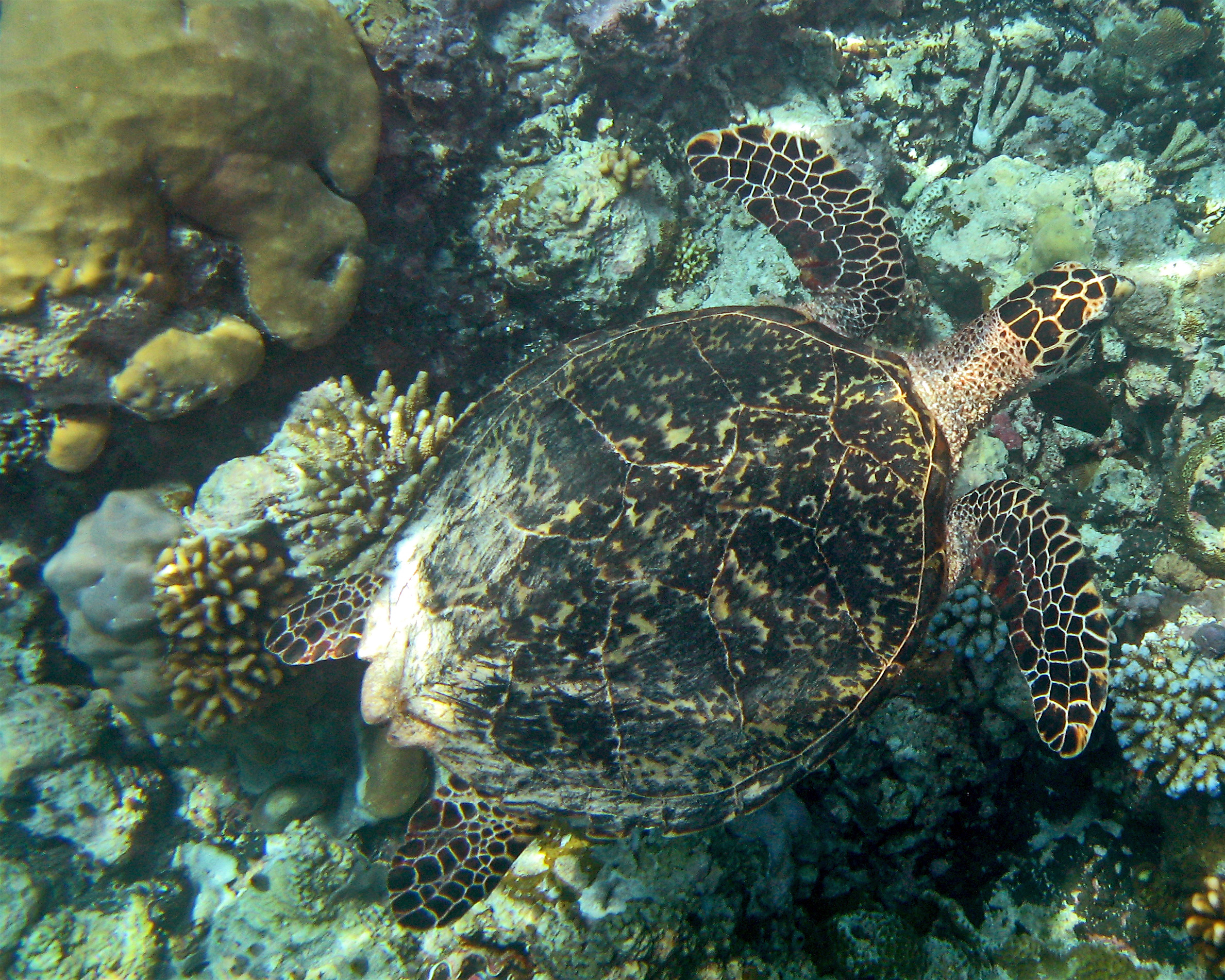
Hawksbill sea turtle Scientific name
Eretmochelys imbricata
How endangered are hawksbill Sea Turtles?
Hawksbills are considered Critically Endangered by the IUCN Red List of Threatened Species.
Facts about hawksbills
Hawksbills are the only marine consumer whose diet predominantly comprises sponges, and thus they play a major role in coral reef ecosystems.
Hawksbills commonly nest within beach vegetation on secluded, low-energy beaches.
Hawksbills in the eastern Pacific are one of the most endangered sea turtle populations in the world.
How big are hawksbill sea turtles?
Adult hawksbills measure 75-90 cm in length and weigh up to 150 kg.
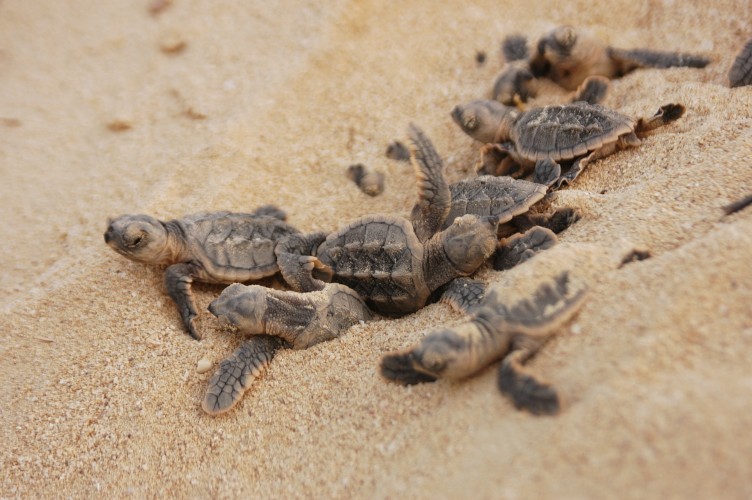
Hawksbill hatchlings measure approximately 30 mm and weigh about 15 g
What do Hawksbill sea turtles Eat?
Large juveniles and adult hawksbills predominantly eat sponges and other sessile invertebrates associated with coral reefs and rocky reefs.
How do hawksbill reproduce?
The specific age of sexual maturity of hawksbills isn’t known, but estimates suggest they begin nesting at about 25-35 years old. Once they reach sexual maturity, hawksbills reproduce every 2-4 years.
During a nesting season, hawksbills lay 2-5 clutches of around 150 eggs each per season. The eggs are the size of ping-pong balls and weigh 25-30 g each and take about 50 days to incubate before hatching.
THREATS TO hawksbill SEA TURTLES
Hawksbills face numerous threats, most of them related to human activities. These threats include:
Fisheries Interactions - Bycatch, or the accidental capture, of hawksbills in fishing nets and lines is one of the greatest threats to all species of sea turtles. Discarded fishing gear, aka “ghost gear” also continues to entangle sea turtles indefinitely as it floats in the ocean.
Pollution and Pathogens (including plastic pollution) - plastic pollution affects hawksbills by entangling them and impeding their movement and swimming ability. Sea turtles also eat plastic, mistaking it for food, which can cause choking, intestinal damage, and blockages.
Coastal Development - developed beaches restrict the area that hawksbills have to lay their nests and lights from buildings discourage nesting turtles and disorient hatchlings.
Climate Change - changing climate impacts coral reefs, which host the hawksbills’ food sources, and affects their migration routes, and the development of baby turtles. Hotter, dryer sand negatively impacts the incubation of sea turtle nests and warmer nests produce more female hatchlings than males – an issue for population demographics.
Direct Take - In some places, hawksbill turtle eggs are harvested for consumption, and adults are hunted for their meat. In addition, hawksbills are killed for their beautiful shells, which are made into jewelry and trinkets, marketed as tortoiseshell.
Distribution of hawksbill Turtles
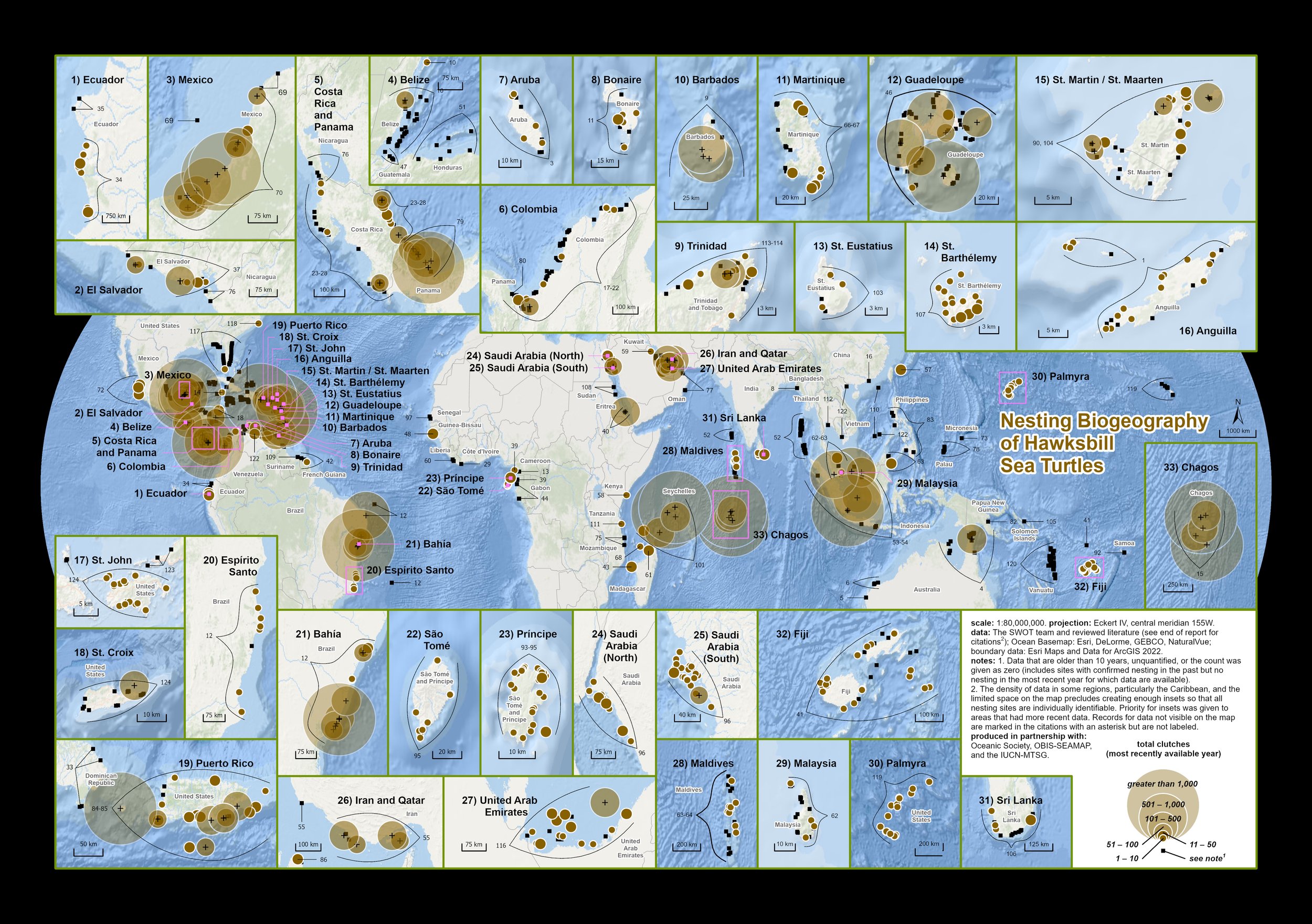
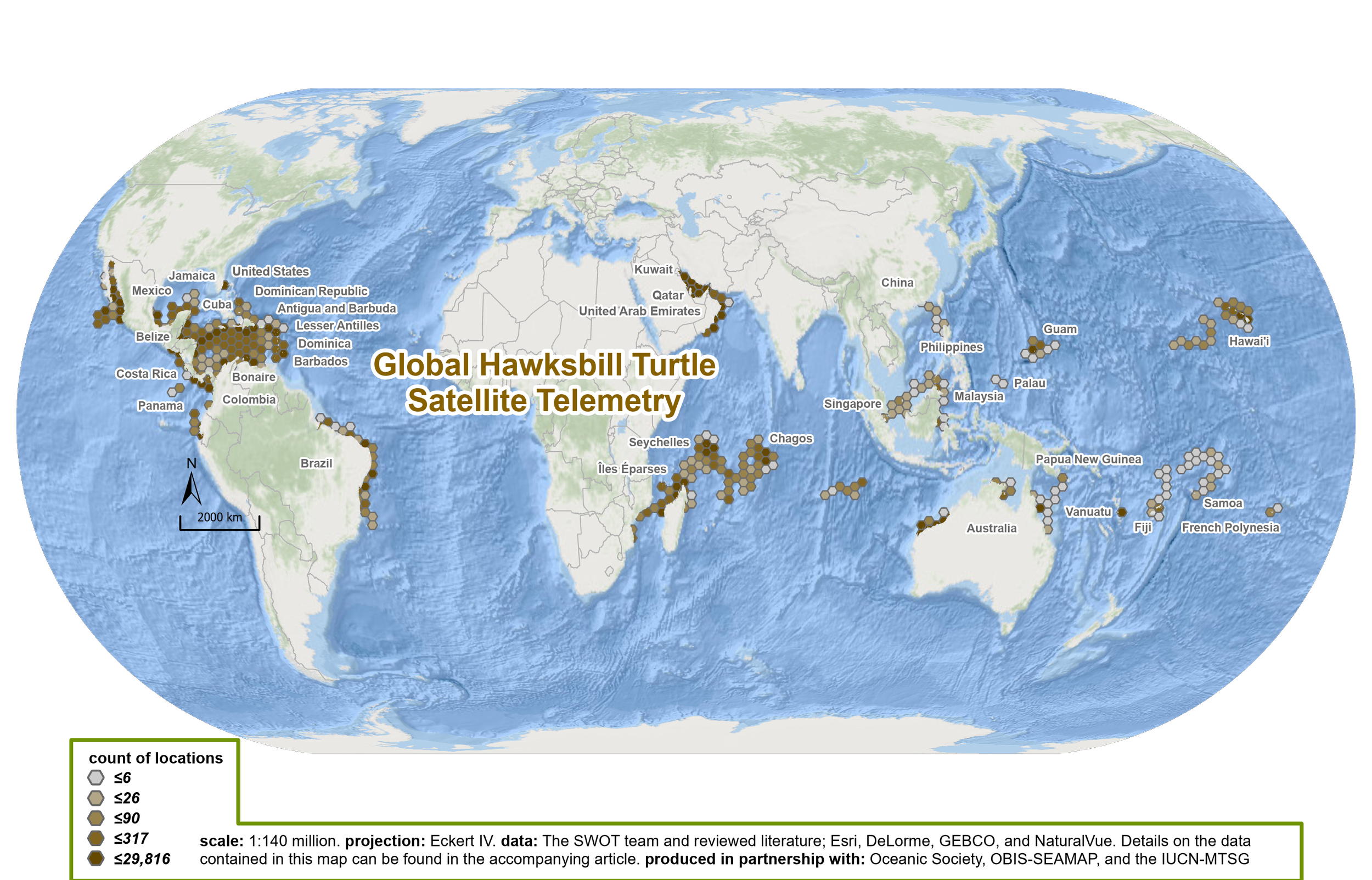
Hawksbills are circumglobal, nesting in the tropics. Their non-nesting range is generally restricted to tropical regions as well, although during immature stages they enter sub-tropical regions.